
The Architecture of the Plate
Beyond the Tupperware: The Sophisticate’s Guide to Component Meal Prep
In the world of modern wellness, "Meal Prep" often conjures images of identical plastic containers filled with dry chicken, gray broccoli, and a scoop of rice—repeated five days in a row. For the epicurean, this is a soul-crushing prospect. For the nutritional scientist, it is a logistical solution to macro-management, but one that lacks sensory intelligence.
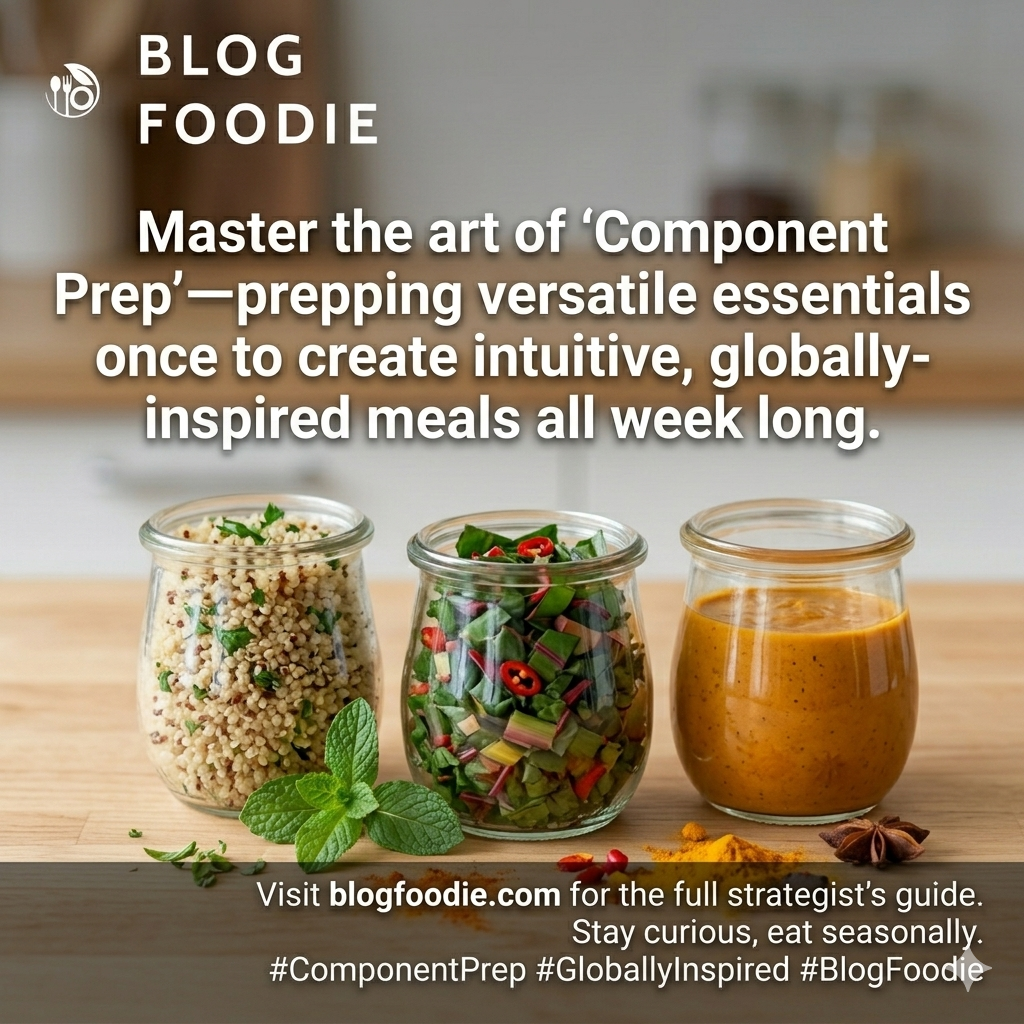
Enter Component Meal Prep. Instead of pre-assembling static meals, we curate high-quality building blocks. This method honors both the laboratory and the larder, allowing for spontaneous assembly, seasonal variation, and a much-needed escape from "leftover fatigue."
Origin: Look for the Red Kuri or Honeynut varieties at your local farmer’s market. These aren't your standard supermarket pumpkins; they are heritage seeds preserved for flavor density.
Nutritional Profile: A powerhouse of beta-carotene and complex polysaccharides. Unlike refined grains, these provide a slow-burn glucose release that stabilizes the insulin response.
Sourcing: Buy heavy, matte-skinned specimens from local growers. The shorter the distance from vine to table, the higher the cellular integrity of the fruit.
The Diet Duel: Two Perspectives on Components
Focuses on precision and compliance. Prepping components allows for exact gram-weight tracking of macros. It removes the "hazard of choice" during the mid-week slump, ensuring caloric targets are met with clinical accuracy.
Focuses on bio-individuality and the Gut-Brain axis. Static meals ignore how you feel on Tuesday vs. Thursday. Separated components allow you to adjust for "energetic needs"—more fats for grounding, or more bitter greens for detoxification.
Deconstructing the Prep: The Strategy
To master the component method, one must stop thinking in "dishes" and start thinking in "textures and functions." Every successful fridge should contain:
- The Foundation: One roasted root vegetable and one cold-hardy grain (like sprouted farro).
- The Fuel: A clean protein, perhaps a lemon-herb poached wild salmon or pasture-raised soft-boiled eggs.
- The Vibrant: A jar of quick-pickled shallots or a massaged kale base.
- The Catalyst: A high-fat dressing or sauce (think tahini-turmeric or a sharp salsa verde).
Global Harvest: The "Autumnal Buddha" with a Provencal Twist
This dish uses your prepped local components to recreate the sophisticated flavor profiles of Southern France.
- Assemble: Layer 1 cup of prepped roasted Heirloom Squash over a bed of bitter radicchio.
- Integrate: Add 1/2 cup of sprouted grains and your choice of protein.
- The Technique: Instead of a heavy dressing, use a monovarietal olive oil and a squeeze of fresh lemon to emulsify the squash's natural sugars.
- The Finish: Top with toasted walnuts and fresh thyme.
Key Takeaway: Component prepping isn't just about saving time; it's about culinary autonomy. It allows you to be a scientist on Sunday so you can be an artist on Wednesday.
Ready to dive deeper into the science of seasonal eating?
Visit BlogFoodie.com to join our community and download the full "Component Blueprint."